



Can You Shower After IPL?
Yes, and there is no waiting period — but keep it lukewarm. What manufacturer instructions actually say about hot water, baths and saunas after IPL.
By Angelica Alcaraz, BSN, RN
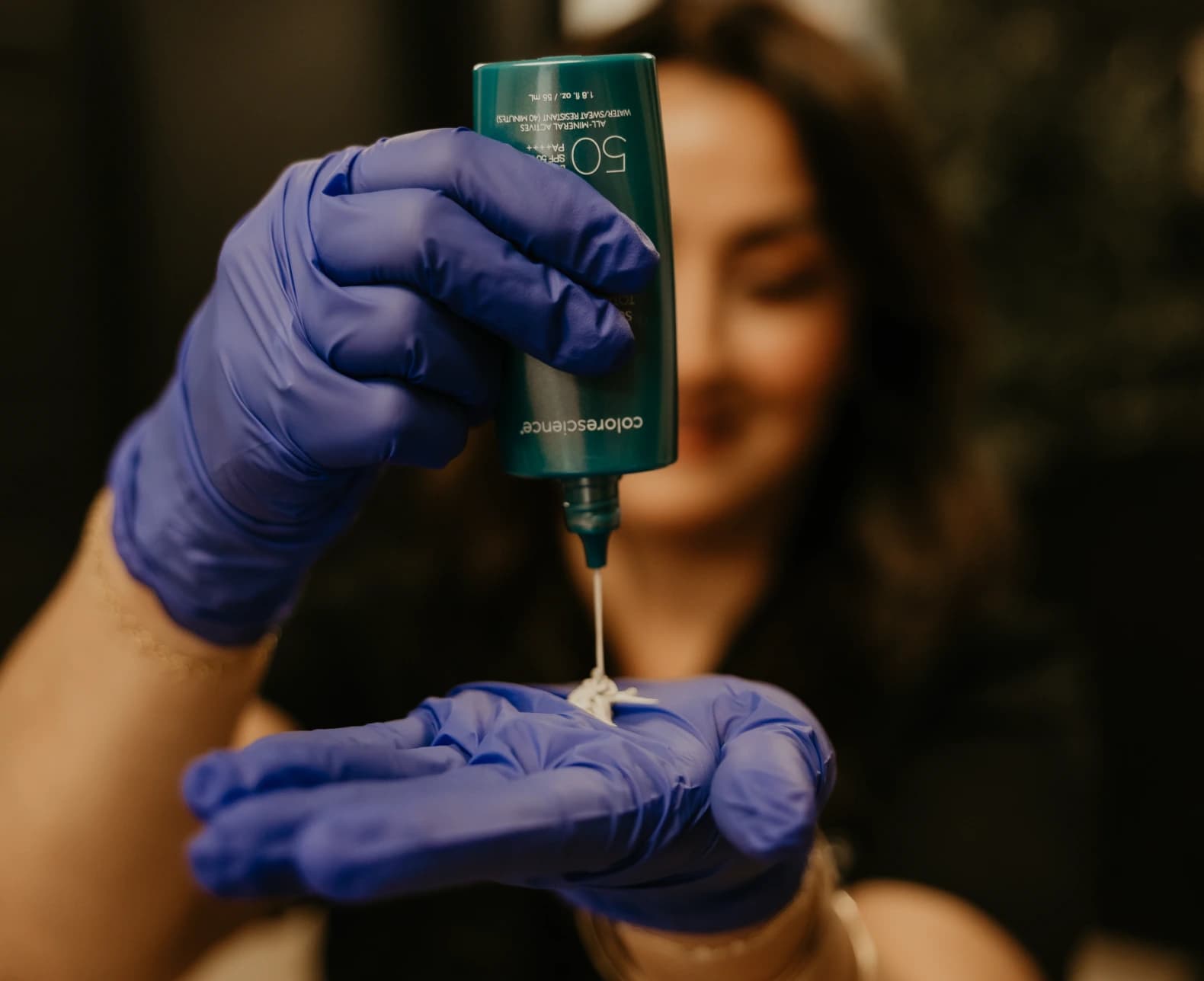
Yes — and you do not have to wait. Sciton, whose BBL system is used in clinics, tells patients to cleanse twice a day with "plain, lukewarm water and a gentle cleanser," starting straight away. The rule is the temperature, not a waiting period.
What almost every page on this subject gets wrong is the number. You will read "wait 48 hours before a hot shower" everywhere. We went looking for that rule in the actual manufacturer instructions and dermatology society guidance, and it is not in any of them.
What the official documents actually say
| Sciton BBL (clinic) | Philips Lumea manual | Braun Silk-expert Pro 5 | |
|---|---|---|---|
| Washing / lukewarm shower | Twice daily, lukewarm, gentle cleanser | Not mentioned | Not mentioned |
| Hot water | Avoid "too hot or too cold water" while healing | Not mentioned | Not mentioned |
| Hot tub / sauna | Not named | Not mentioned | Avoid for 24 hours |
| Pool / chlorine | Avoid pools and spas with chlorine while healing | Not mentioned | Not mentioned |
| Exercise / sweating | Avoid until skin has healed | Not mentioned | Not mentioned |
| Products after | Moisturise generously | Fine immediately, unless irritated | Avoid irritating products 24 hours |
| Sunscreen | SPF 30+ daily from treatment day | SPF 50+, especially first 48 hours | SPF 15+ |
Three things fall out of that table.
The only real hour-figure belongs to Braun, in the Silk-expert Pro 5 manual: "Avoid any activity or skin products that may irritate your skin for 24 hours after treatment. This includes using hot tubs or saunas." Note what it says and what it does not — hot tubs and saunas, not showers or baths.
Sciton measures in healing, not hours. Its patient handout says to follow the aftercare plan "until skin is completely healed – typically one week after the treatment," and the only hour reference in the entire document is a suggestion to use a cold compress if the area feels especially warm in the first 12 hours.
Philips' manual imposes no water or heat restriction at all. It says you can apply lotions, creams, deodorant, moisturiser or cosmetics to treated areas after use, and to wait only if you have redness or irritation. The 48-hour figure that does appear in the Lumea manual is a sunlight rule — protect skin with clothing or SPF 50, especially for the first 48 hours. It is widely misquoted online as a heat rule. Philips' separate marketing pages do suggest avoiding "very hot baths" for the first day or two, but that is advisory copy, not the instruction manual.
The American Academy of Dermatology and the ASDS say nothing about showering, bathing or saunas at all. Their post-treatment guidance is about sun protection, cool compresses and when to reintroduce makeup. If a page tells you the AAD recommends waiting a specific number of hours before you shower, it is inventing that.
So what should you actually do?
Reconciling the sources, rather than picking the scariest number:
- Wash normally, the same day, in lukewarm water. Use a gentle cleanser and your hands. Sciton is explicit about not rubbing, not scrubbing, and not using an exfoliating soap or a cleansing brush.
- Skip genuinely hot water while the skin is still pink. Heat is the variable every source that mentions water agrees on. Sciton's line is "too hot or too cold."
- Hot tubs, saunas and steam: 24 hours at minimum, on Braun's authority, and longer if your skin is still red. Clinic-treated skin often stays pink for four to eight hours or more, and sometimes a good deal longer.
- Pools: wait until the skin has healed. Sciton names chlorinated pools and spas specifically. No document puts a day count on it.
- Exercise: until the skin has healed and you are not sweating into it. Again, healing rather than hours.
- Sunscreen from day one. This is the one point on which everybody agrees, and it is the one people skip. Broad-spectrum SPF 30 or higher, daily, starting the day of treatment, with no direct sun for two weeks.
Why heat matters at all — and how sure we are
Here is the honest position: there is no clinical trial testing whether a hot shower after IPL makes outcomes worse. We looked. The timing advice on every website, including the numbers above, is convention and manufacturer caution, not trial data.
The reasoning behind it is sound, though. IPL works by selective photothermolysis — light is absorbed by pigment and haemoglobin and converted to heat. Treated skin has a temporarily impaired barrier and an active inflammatory response. Adding external heat sustains vasodilation and prolongs redness and swelling, and more inflammation is generally associated with a higher risk of post-inflammatory hyperpigmentation.
Separately, laboratory work has shown that heat alone can drive pigment production: heat stress in human skin explants and cell models increases melanin through fibroblast signalling pathways. That is cell and tissue research, not a study of people taking hot showers after IPL, and a major melasma review cautions that infrared and visible light are much weaker melanogenic stimuli than UV and their role is still unclear. Both halves of that are worth knowing.
So: be sensible about heat because the mechanism is plausible and the cost of being careful is nil. Do not believe anyone who tells you the number is proven.
If you are using a home device
Most people asking this question are using a Philips Lumea, a Braun Silk-expert or something similar, not sitting in a clinic chair. A few things change.
Home devices run at far lower energy than clinic systems, which is why their manuals are so relaxed about water. Follow your own device's manual over anything you read online, including this page — and note that the two leading manuals genuinely differ from each other.
What does not relax is skin tone. Both manufacturers set a hard limit: Braun says do not use the device if your skin is darker than tone V on its chart, warning that dark skin absorbs more light energy and that treating very dark skin risks burns, blisters, discoloration and scarring. Philips contraindicates its darkest tones outright.
The part that matters more than your shower
If your skin is Fitzpatrick IV or above, the water temperature is the least of it.
A 2025 case report in Cureus describes a patient in his late twenties with Fitzpatrick IV skin who developed second-degree burns after IPL at a non-medical spa, where identical settings were used across three sessions with no individualisation and reported pain during the third session was dismissed. He recovered, with minimal residual hyperpigmentation, after four months of treatment. The authors' conclusion is blunt: the case "demonstrates the potential for serious complications, such as second-degree burns, when IPL is performed by non-medical personnel without adequate training," and they note that IPL is generally not recommended above Fitzpatrick III, because in deeper skin tones epidermal melanin competes with haemoglobin for the light and raises the risk of thermal injury.
This is worth being clear about: every documented IPL burn we found was caused by treatment settings or operator error — not by someone taking a shower afterwards. The realistic risk of getting aftercare wrong is prolonged redness, irritation and possibly a higher chance of pigment change. The serious risks sit with the treatment itself.
For deeper skin tones the published preference is a long-pulsed 1064 nm Nd:YAG rather than IPL, which is the wavelength Revive uses for pigment, redness and acne across Fitzpatrick I–VI. If you are unsure which is appropriate for your skin, that is a one-visit conversation — ask at a consultation before booking any light-based treatment.
For the wider aftercare picture, see what to avoid after your IPL treatment, and IPL photofacial explains what the in-clinic treatment involves. If a laser is the better fit for your skin tone, the Aerolase Neo Elite hub covers the 1064 nm option.
Angelica Alcaraz, BSN, RN, will assess your specific needs during your consultation.
Frequently Asked Questions
Ready to transform
your skin?
Schedule a free consultation to discuss which treatments are right for you.