



What Does Glutathione Do for Your Face?
What the evidence shows for oral, topical and IV glutathione on skin — including the one controlled IV trial, and why regulators have issued warnings.
By Angelica Alcaraz, BSN, RN
Glutathione is your body's main internal antioxidant, and in the laboratory it does interfere with pigment production — it inhibits tyrosinase and pushes melanin synthesis toward a lighter pigment. That much is real biochemistry.
Whether that translates into a visibly brighter face is a different question, and the honest answer is: much less than the industry implies, and the intravenous version has essentially no good evidence behind it at all.
This page is the evidence, including the parts that do not favour selling it.
What it is and how it is supposed to work
Glutathione is a tripeptide — glutamic acid, cysteine and glycine — made in your liver and present in most cells, cycling between a reduced form (GSH) and an oxidised form (GSSG).
Four mechanisms are proposed for its effect on pigment: it inhibits tyrosinase, the rate-limiting enzyme in melanin production, by binding copper at the enzyme's active site; it diverts melanin synthesis from dark eumelanin toward lighter pheomelanin; it quenches free radicals that would otherwise switch tyrosinase on; and it downregulates MITF, a transcription factor that drives melanocyte activity.
All of that is plausible and repeatedly described in the literature. Two things temper it immediately.
Absorption is the first problem. Oral glutathione is hydrolysed by enzymes in the gut, which cuts its bioavailability. Topical glutathione is poorly absorbed because its thiol group rapidly forms a disulfide. The routes most people use are the two that struggle to arrive.
The pheomelanin shift is not obviously a good thing. Eumelanin is the photoprotective pigment. Trading it for pheomelanin means trading away some natural UV protection, and the authors of the main intravenous trial note that this "may increase the risk of sun-induced malignancies, at least theoretically." That is a theoretical concern, not a demonstrated harm — but it belongs in any honest account.
Oral glutathione: small, short, and contradicted by the biggest study
Three randomised placebo-controlled trials matter here.
Arjinpathana and Asawanonda (2012) gave 60 healthy adults 500 mg a day for four weeks and measured melanin index at six body sites. Melanin index fell at all six — but the reduction was statistically significant versus placebo at only two of the six.
Weschawalit and colleagues (2017) ran a three-arm trial in 60 women for 12 weeks, comparing reduced glutathione, oxidised glutathione and placebo. Melanin index and UV spots "tended to be lower" than placebo — the language of a trend, not a significant result. There was significant wrinkle reduction at some sites.
Sitohang and colleagues (2021) ran the largest and most rigorous version: a multicentre, randomised, double-blind, placebo-controlled trial in 90 patients with Fitzpatrick IV–V skin, using 500 mg of L-glutathione with vitamin C, alpha-lipoic acid and zinc for 12 weeks, measured on the Janus facial analysis system. The result was negative: no significant difference in spots, skin tone or overall efficacy between the supplement and placebo.
A 2025 systematic review in the International Journal of Dermatology concluded that oral and topical glutathione are "moderately efficacious" for lightening — and then added the word that matters: the outcomes are "unsustainable." They reverse when you stop. No trial has followed anyone after cessation.
Topical glutathione: five studies exist
A 2025 systematic review found only five clinical trials of topical glutathione in the entire literature.
The cleanest is Watanabe and colleagues (2014): a double-blind, split-face, placebo-controlled trial in 30 women using 2% oxidised glutathione lotion twice daily for 10 weeks. It reduced melanin index (p<0.05), reduced transepidermal water loss (p<0.05) and reduced wrinkles (p<0.01), with one case of mild transient redness.
That is a genuine result. The other four are a biomarker study, a photoprotection signal, a trial with no true control group, and a multi-ingredient cream in which 10% azelaic acid is the likely active — you cannot attribute its effect to glutathione. The reviewers' own summary is "small sample size, limited follow-up time, and a lack of control groups."
Topical effects are also local. It works where you put it, if it works.
Intravenous glutathione: this is the section that matters
There is, as far as the published literature goes, one controlled trial in the world of IV glutathione for skin lightening. It is worth going through properly.
Zubair, Hafeez and Mujtaba (2016), published in the Journal of Pakistan Association of Dermatologists, randomised 50 patients to IV glutathione 1,200 mg or IV saline, twice weekly for six weeks — twelve infusions. Only 32 completed, because nine patients in the glutathione arm had to be withdrawn for adverse effects.
Efficacy: 6 of 16 glutathione patients (37.5%) improved versus 3 of 16 on placebo (18.7%). p = 0.054. Not statistically significant.
Durability: at two months, 18.7% versus 12.5%. At four months, 18.7% versus zero. At six months, one patient out of sixteen — 6.2% — retained any improvement.
Safety, among all 25 who received glutathione:
| Adverse effect | Rate |
|---|---|
| Feeling of warmth during injection | 44% |
| Abdominal cramps | 40% |
| Deranged liver function tests | 32% |
| Feeling of heart sinking | 28% |
| Diarrhoea | 16% |
| Paraesthesia | 16% |
| Dizziness | 12% |
| Anaphylactic shock | 4% |
| Vomiting | 4% |
No adverse effect occurred in any placebo patient. The authors' conclusion, verbatim: "Glutathione is not very effective for skin tone lightening; moreover treatment loses its efficacy with time. The side effects of the treatment are common." And: "Our study does not recommend glutathione for skin lightening."
The 2025 systematic review reaches the same place from a different direction: "IV glutathione is contraindicated due to lack of efficacy and side effects."
The regulatory picture, stated precisely
There is no FDA-approved glutathione drug product in the United States — for skin lightening or for anything else. IV glutathione here is a compounded preparation. Compounded drugs are not reviewed by the FDA for safety, effectiveness or quality before they are sold. "Available from a compounding pharmacy" is not "FDA-approved," and the two get conflated constantly.
The FDA specifically recommended against adding glutathione to the list of bulk substances permitted for compounding under section 503A, citing the absence of adequate and well-controlled studies. Its advisory committee voted narrowly the other way, but those votes are non-binding.
This is not a theoretical risk. On 9 January 2019, seven patients at a single US outpatient clinic received IV L-glutathione and within minutes developed nausea, vomiting, lightheadedness, chills and body aches; one developed low blood pressure and breathing difficulty and was hospitalised. FDA testing found bacterial endotoxin at up to five times the acceptable limit. The powder was labelled "Caution: Dietary Supplement" and its manufacturer confirmed it was never intended for sterile injectables. Several US compounding pharmacies have since recalled glutathione vials for elevated endotoxin.
Outside the US, the Philippine FDA has advised that there are no published clinical trials evaluating injectable glutathione for skin lightening and no established dosing guidance, and that injectable glutathione is approved there only as an adjunct in cisplatin chemotherapy. The Philippine Dermatological Society has issued its own public warning.
One thing we will not claim: the American Academy of Dermatology has no position statement specific to glutathione for skin lightening. If a page tells you otherwise, check it.
Published case reports include Stevens-Johnson syndrome and toxic epidermal necrolysis following an IV infusion containing glutathione at a wellness centre, a systemic inflammatory response requiring intensive care after an unregulated high-dose cosmetic infusion, and — importantly — toxic epidermal necrolysis traced to oral glutathione whitening pills, confirmed by laboratory testing. "It is just an antioxidant, so it is safe" is not a supportable statement.
What glutathione is actually good for
Setting lightening aside, two things hold up.
Supplementation does raise your glutathione stores. A six-month randomised, double-blind, placebo-controlled trial in 54 adults found that 250 mg or 1,000 mg daily significantly increased glutathione in red blood cells, plasma and lymphocytes. That is a biomarker outcome — it proves the supplement is absorbed and replenishes stores. It does not demonstrate any cosmetic benefit, and a published commentary has contested the paper.
As an antioxidant adjunct rather than a primary lightener, the 2025 review suggests glutathione may have a role in melasma. That is a modest, defensible framing.
And the topical wrinkle and barrier findings from Watanabe are real, if small.
If what you actually want is more even skin
Most people searching this are not chasing "glutathione." They want something done about melasma, sun damage, post-inflammatory dark marks or uneven tone — and for those there are options with genuinely better evidence.
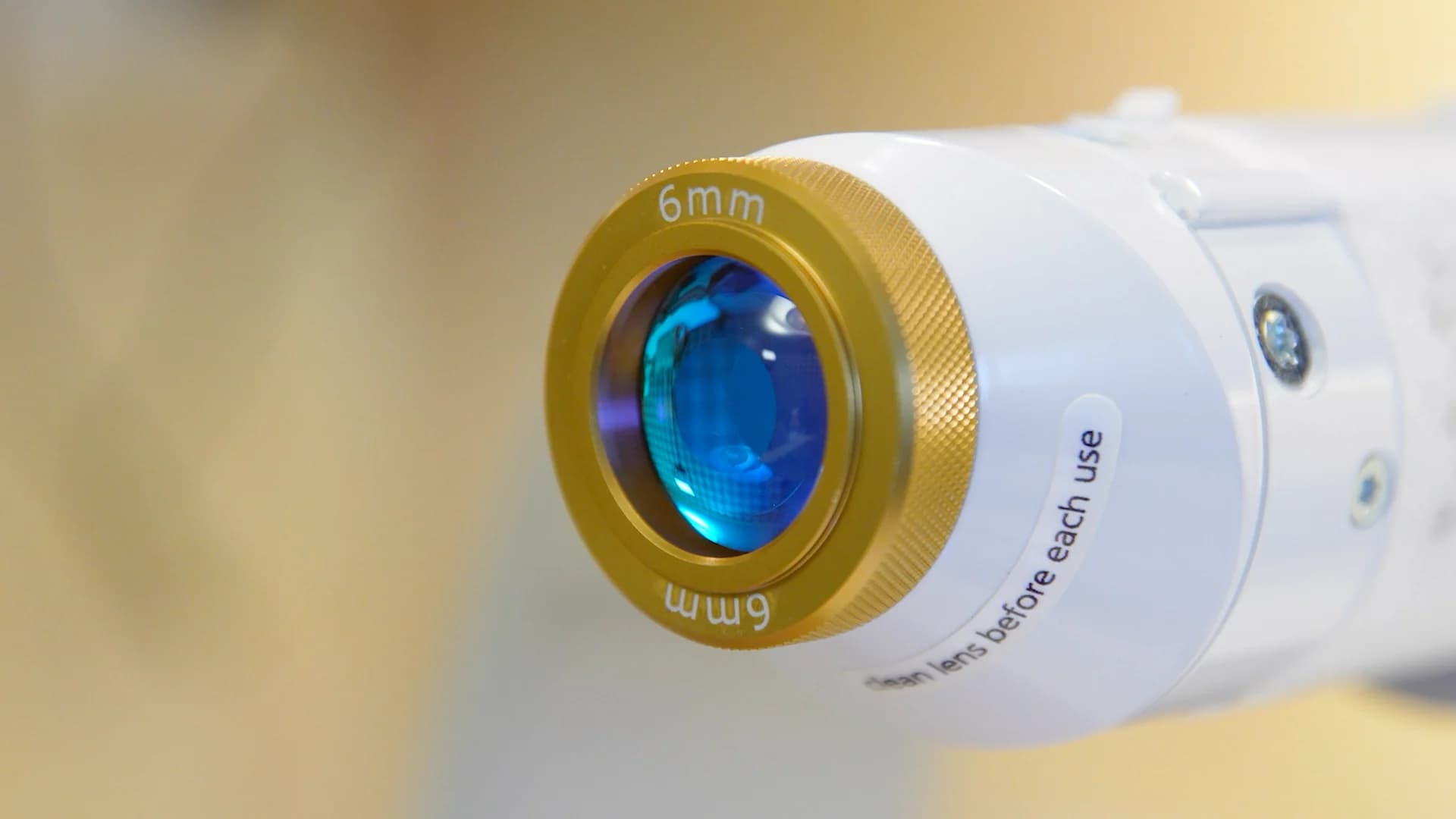
At Revive that generally means the 1064 nm Nd:YAG laser, which is used for pigment, melasma and redness across Fitzpatrick I–VI, and which has randomised and real-world published data behind it, including a 225-patient review in which 38% of patients were African American. It is not a cure — pigment conditions are managed, not cured — but the evidence base is not comparable to glutathione's.
Sunscreen, daily and properly, does more for pigment than any infusion will.
If you are considering glutathione for wellness or antioxidant reasons rather than for lightening, that is a legitimate conversation to have at a consultation, with the evidence above on the table. What we are not going to do is tell you an infusion will brighten your face when the only controlled trial of that says it will not.
For the longer evidence review, see glutathione benefits on skin. IV therapy benefits covers what infusion therapy is and is not for, and the Aerolase Neo Elite hub covers the pigment options.
Angelica Alcaraz, BSN, RN, will assess your specific needs during your consultation.
Frequently Asked Questions
Ready to transform
your skin?
Schedule a free consultation to discuss which treatments are right for you.